Pattern
Herringbone provides strong interlock for trafficked areas; other bonds can help distinguish paths and quieter zones.
Versatile block-paved driveways, paths and entrances laid with disciplined preparation, accurate lines and durable restraints.
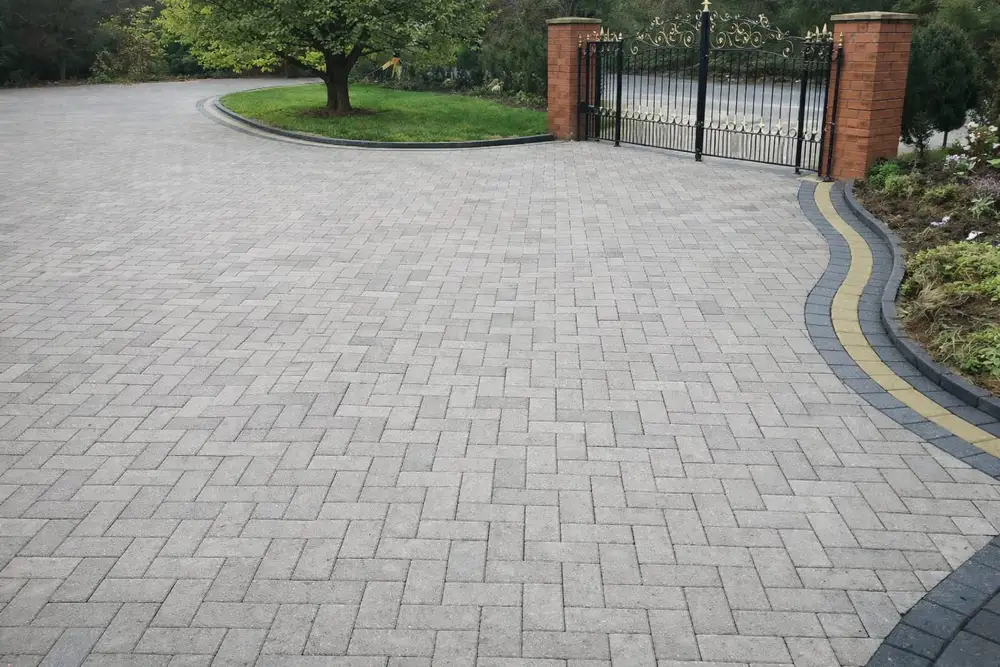 Herringbone / curved soldier course
Block paving gives you exceptional control over colour, pattern, borders and detailing. It is also maintainable because individual units can be lifted when access beneath the surface is needed. The quality of a block-paved driveway is determined by the formation, sub-base, edge restraints, laying course and jointing—not simply the blocks selected.
Each choice affects appearance, vehicle movement and the way the driveway meets the property.
Herringbone provides strong interlock for trafficked areas; other bonds can help distinguish paths and quieter zones.
A soldier course frames the field, protects edges and can introduce a controlled contrast.
We consider the brick, stone, roof and surrounding landscape instead of choosing the block in isolation.
Block size, parking layout and overall area must feel proportionate when viewed from the road and the house.
Excavation, sub-base compaction, drainage falls and edge restraints determine whether the finished field remains even and tight. The laying course is prepared accurately; blocks are cut neatly around fixed points; jointing sand is worked into the surface and the area is compacted in sequence.
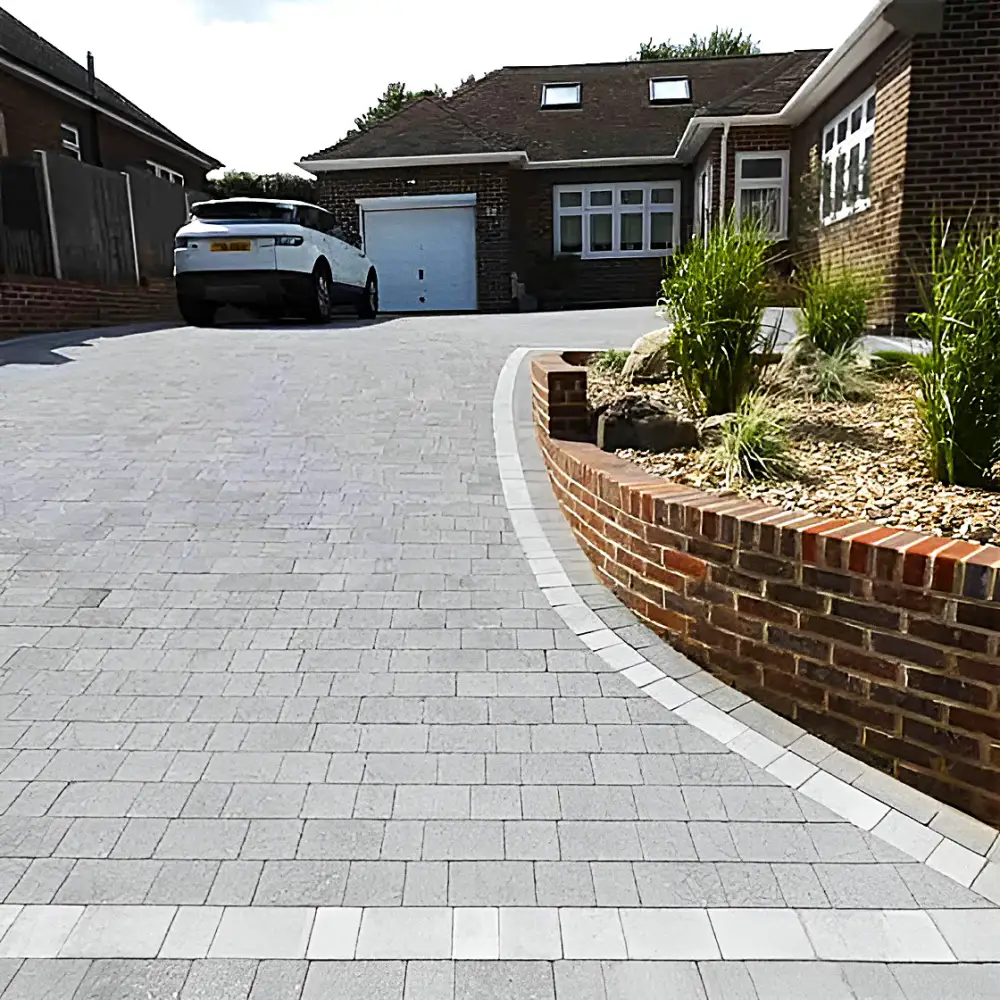
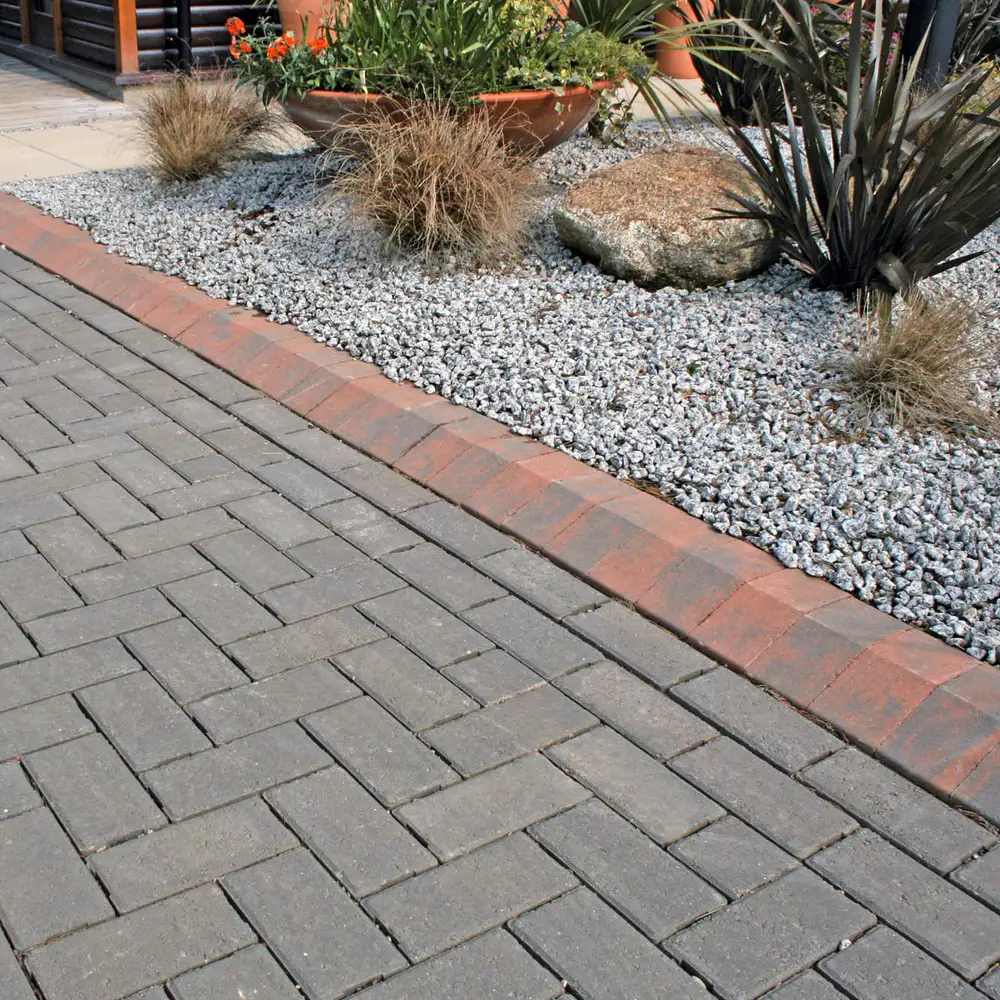
Individual blocks can be lifted to reach certain services beneath or replace locally damaged units. That is a genuine advantage—but only when reinstatement protects the laying course, jointing and pattern.
Routine care may include sweeping, weed control, cleaning and replenishing jointing sand after appropriate washing. Settlement should be investigated rather than hidden with more sand.
Curves, planting and restrained colour prevent a block-paved frontage from becoming visually hard.
Suitability depends on access, levels, ground conditions, drainage, intended loading and the finish you want. We assess these points during a site visit before recommending a specification.
The quotation can include excavation, spoil removal, sub-base construction, compaction, edge restraints, drainage and the final installation. The exact depth and build-up must reflect the site rather than a one-size-fits-all figure.
A 45-degree or 90-degree herringbone pattern is commonly chosen for trafficked areas because the arrangement provides strong interlock. Pattern selection must still work with block type, edge restraints, driveway shape and the direction vehicles move.
Good joint filling, secure edges and routine maintenance help. Weeds usually establish in debris that collects at the surface rather than growing up through a correctly built driveway. Appropriate cleaning and replenishing lost jointing sand are important parts of care.
Duration depends on area, access, excavation, weather, curing requirements and any drainage or groundwork. We outline the likely sequence when quoting and keep you informed if site conditions affect it.
Yes. Falls, channels, gullies, permeable construction and soakaway measures can be considered as part of the overall design, subject to site conditions and suitable discharge arrangements.
Yes. Contact us with your postcode, approximate dimensions and a few photographs if available. We can then arrange a site visit where appropriate.
Send your postcode and a short outline. B&H will contact you to discuss the site, suitable options and the next available visit.