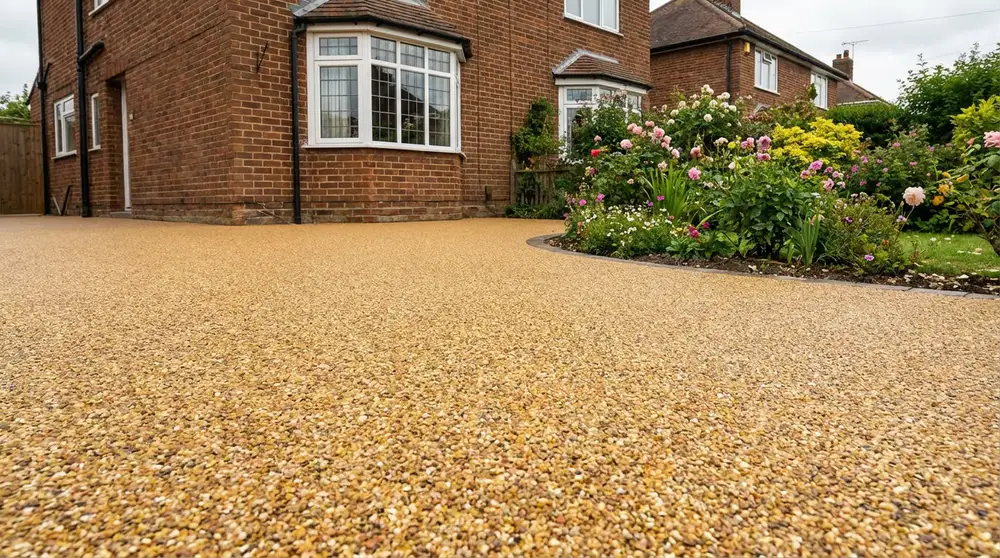
Surface course
The close-textured wearing layer creates the finished appearance and everyday running surface.
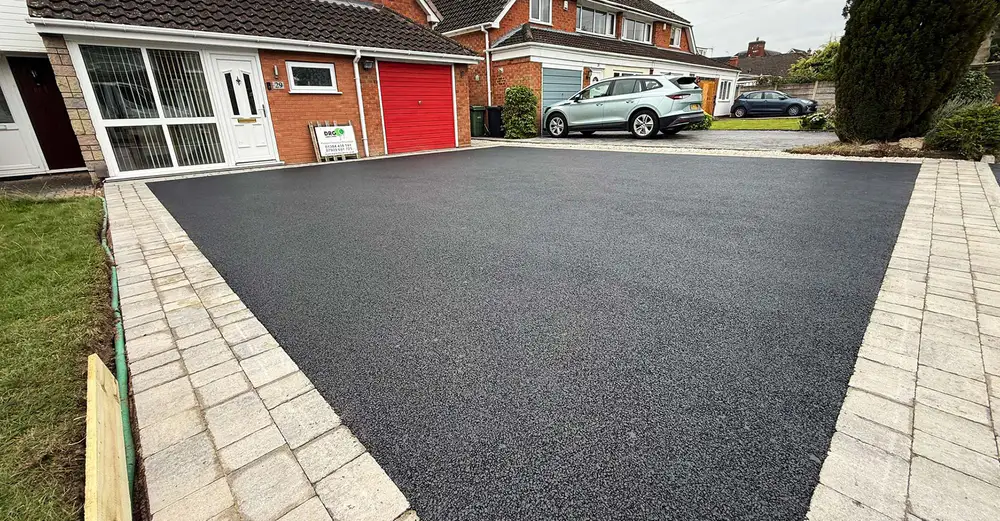
Hard-wearing, clean-lined tarmac driveways designed around the traffic, levels and drainage of your property.
Tarmac remains one of the most practical surfaces for busy homes, shared access roads and commercial entrances. The visible finish is only the final layer: long-term performance depends on excavation depth, a well-compacted sub-base, correctly formed falls and strong edges.
A successful specification balances vehicle loading, existing ground, gradients, thresholds and water movement. We inspect those conditions first, then agree whether the project needs complete reconstruction, local base repairs or resurfacing over a sound formation.
The visible blacktop is only one part of the system. The exact depths and materials are confirmed after inspection, but the principle remains consistent: stable ground, controlled water and restrained edges.
The close-textured wearing layer creates the finished appearance and everyday running surface.
A stronger asphalt layer distributes traffic loads and supports the surface above.
Selected stone is placed and compacted methodically to form a stable platform.
Unsuitable material is removed and the exposed ground is assessed before construction continues.
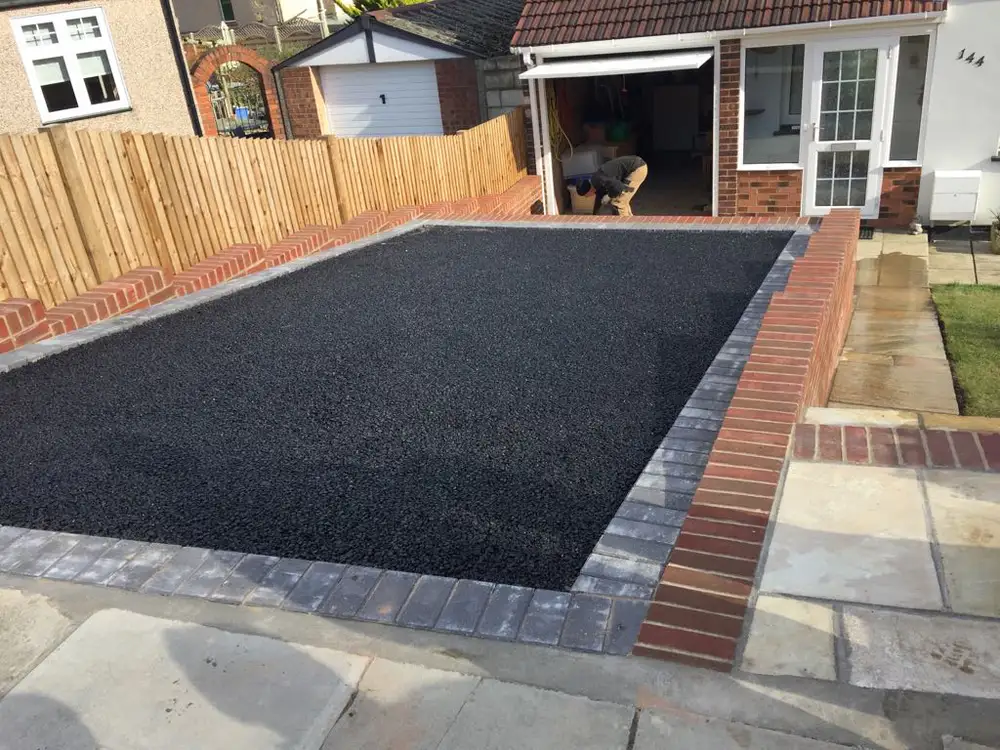
Resurfacing can be sensible when the existing construction is stable, levels allow another layer and drainage still works. It is not a cure for movement, widespread base failure or trapped water.
We explain what can responsibly remain and what should be removed, so the quotation reflects the site rather than a standard sales package.
Selected to improve function, definition or long-term maintenance.
Coordinated with levels, access and the wider frontage.
Selected to improve function, definition or long-term maintenance.
Coordinated with levels, access and the wider frontage.
Selected to improve function, definition or long-term maintenance.
Coordinated with levels, access and the wider frontage.
Tarmac is particularly effective where a clean, robust surface is needed without turning a large frontage into a busy pattern. Contrasting blocks can define the perimeter, protect vulnerable edges and connect the drive visually to the property.
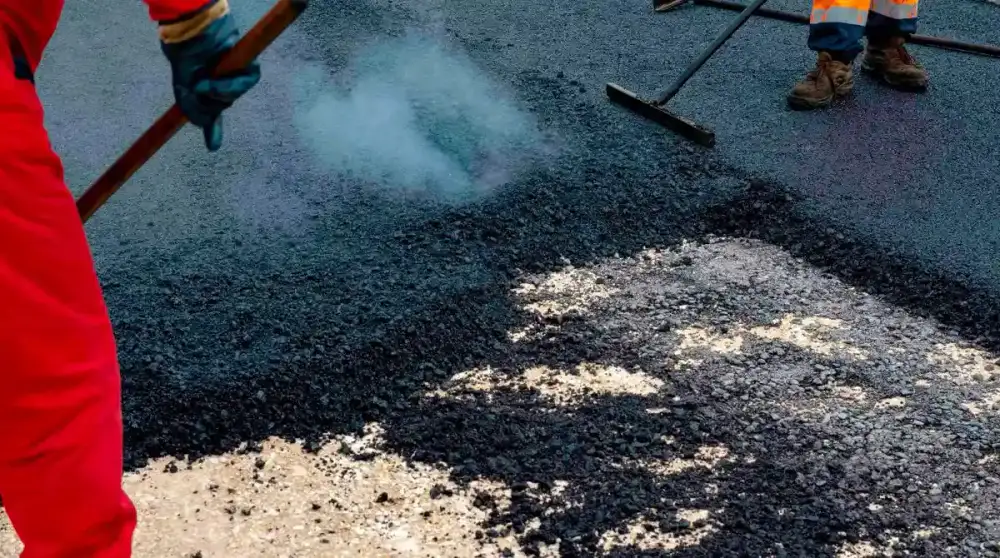
Suitability depends on access, levels, ground conditions, drainage, intended loading and the finish you want. We assess these points during a site visit before recommending a specification.
The quotation can include excavation, spoil removal, sub-base construction, compaction, edge restraints, drainage and the final installation. The exact depth and build-up must reflect the site rather than a one-size-fits-all figure.
Yes. Block-paved or kerbed borders can define the perimeter, protect exposed edges and connect the tarmac visually with the house. Border levels and restraints are installed before the asphalt so the materials work as one construction.
It can be an effective option for sloping access because it forms a continuous trafficked surface. The gradient, surface-water route, transitions and equipment access still need careful assessment before the build-up and laying method are agreed.
Duration depends on area, access, excavation, weather, curing requirements and any drainage or groundwork. We outline the likely sequence when quoting and keep you informed if site conditions affect it.
Yes. Falls, channels, gullies, permeable construction and soakaway measures can be considered as part of the overall design, subject to site conditions and suitable discharge arrangements.
Yes. Contact us with your postcode, approximate dimensions and a few photographs if available. We can then arrange a site visit where appropriate.
Send your postcode and a short outline. B&H will contact you to discuss the site, suitable options and the next available visit.