Driveways
A refined frontage without loose aggregate migrating onto paths or pavements.
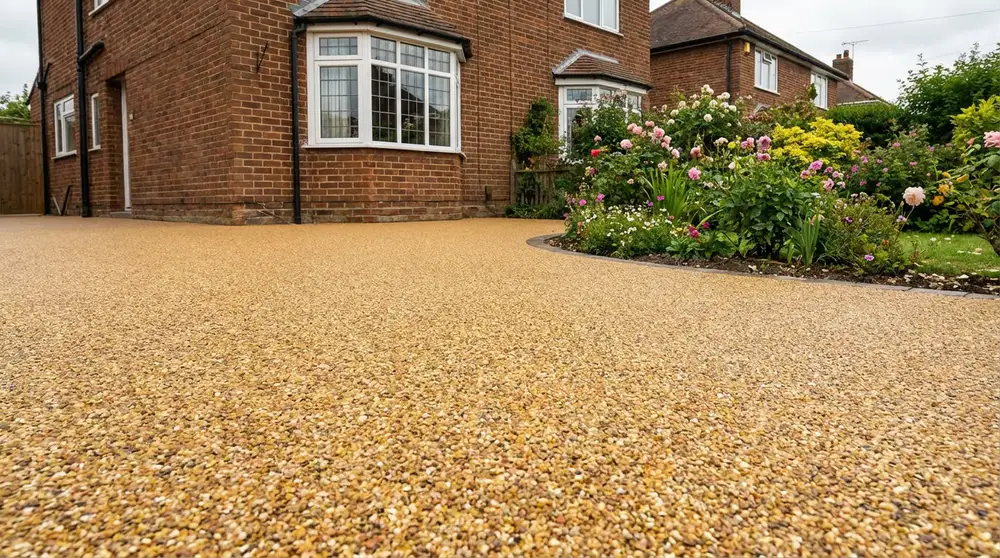
Premium resin-bound surfacing with a seamless stone finish, carefully prepared for stability and controlled drainage.
A resin-bound driveway combines washed decorative aggregate with a clear resin before the mixture is hand finished into a smooth, consistent surface. It is different from loose gravel and from resin-bonded surfacing. Correctly specified resin-bound material forms an attractive, low-scatter finish that can be permeable when installed over a suitable open base.
Aggregate grading, resin quality, mixing accuracy, weather and finishing technique all affect the result. The surface must be mixed consistently and hand-trowelled within a controlled working time. Preparation beneath it must also be appropriate for the proposed use.
We design the surrounding details at the same time: borders, inspection covers, paths, steps, channels and the precise junctions at garages, pavements and entrance gates.
The aggregate blend establishes the overall tone. The trowelled texture changes with the light. Borders and curves give the surface a deliberate ending.
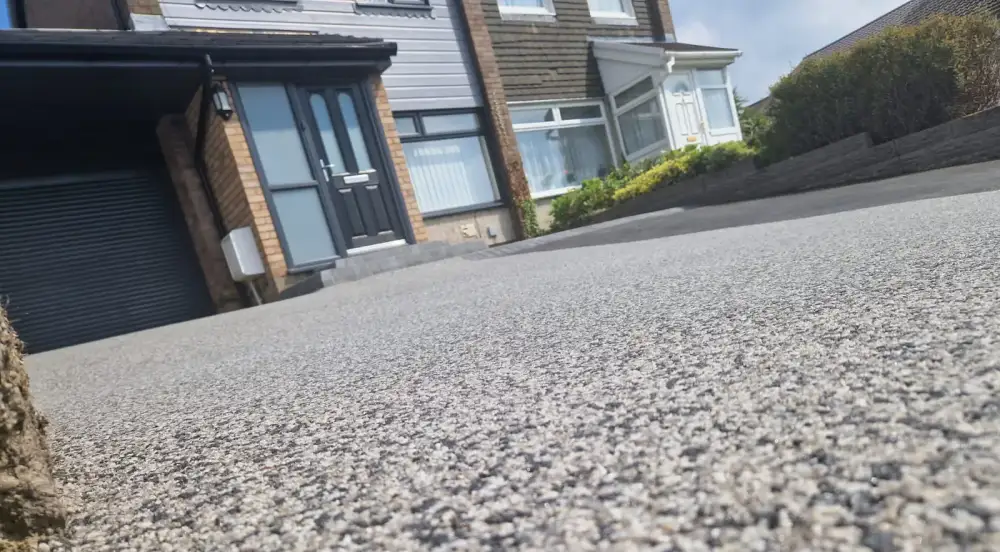
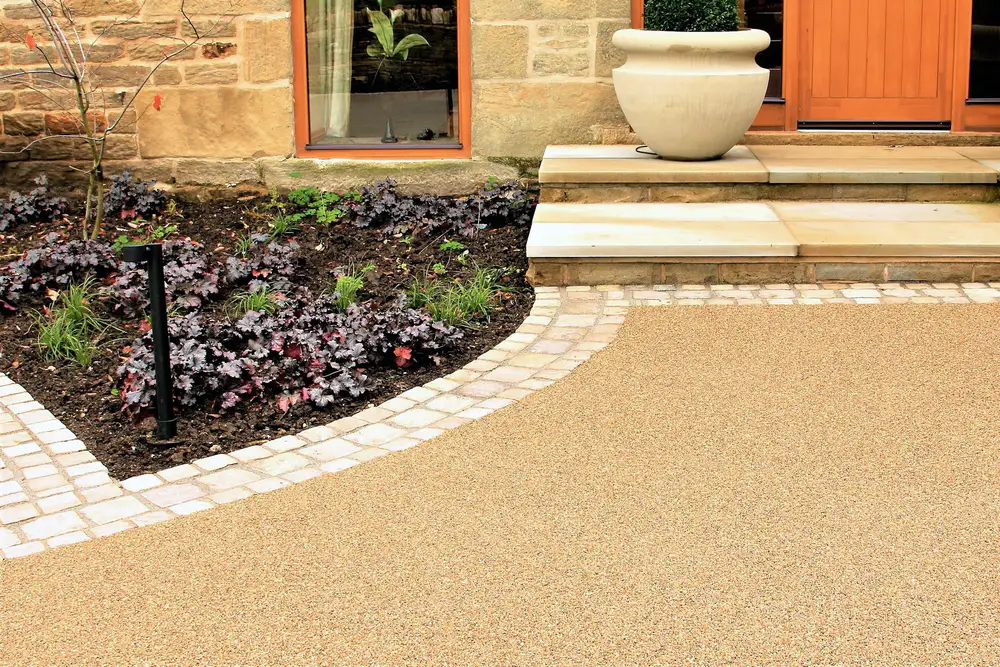
A resin-bound finish can allow water through its open texture, but calling a driveway “permeable” depends on the entire construction. Water still needs somewhere appropriate to go after passing through the surface.
Where drainage within the property is required, the design may include an open-graded base, suitable sub-base, careful falls and an agreed infiltration or collection route. An impermeable base beneath permeable resin changes how the system behaves.
Explore drainage planning →A refined frontage without loose aggregate migrating onto paths or pavements.
A smooth, accessible route that can flow around planting and curved borders.
A calm continuous finish for compact spaces with several doorways and edges.
Contrasting blends or setts can guide movement and define important junctions.
Regular sweepingRemove leaves, soil and organic debris before it settles into the texture.
Careful washingUse appropriate pressure and technique rather than aggressively cutting into the surface.
Early attentionDeal with spills, edge damage or local issues before they become more difficult.
Realistic useThe system should be specified around expected vehicles, turning and parking habits.
Suitability depends on access, levels, ground conditions, drainage, intended loading and the finish you want. We assess these points during a site visit before recommending a specification.
The quotation can include excavation, spoil removal, sub-base construction, compaction, edge restraints, drainage and the final installation. The exact depth and build-up must reflect the site rather than a one-size-fits-all figure.
Resin-bound material is mixed with aggregate before being hand-trowelled, creating a smooth open-textured finish. Resin-bonded systems spread resin onto a base and scatter aggregate over it, producing a rougher non-permeable surface with a different performance and appearance.
Sometimes. An overlay is only sensible when the existing base is stable, compatible, correctly levelled and free from movement that could reflect through the new finish. We inspect cracks, drainage, thresholds and edge details before recommending retention.
Duration depends on area, access, excavation, weather, curing requirements and any drainage or groundwork. We outline the likely sequence when quoting and keep you informed if site conditions affect it.
Yes. Falls, channels, gullies, permeable construction and soakaway measures can be considered as part of the overall design, subject to site conditions and suitable discharge arrangements.
Yes. Contact us with your postcode, approximate dimensions and a few photographs if available. We can then arrange a site visit where appropriate.
Send your postcode and a short outline. B&H will contact you to discuss the site, suitable options and the next available visit.